


A fire watch log is read line by line, usually by someone looking for the hour nobody walked. Inspectors start there, and a log that cannot account for its own gaps puts the whole watch in question.
Properties lose this argument more often than they should. The patrols happened, the officer was on site all night, and the record is too thin to show it. This guide covers when a log is required, what has to go in it, how often entries are made, and what makes one fail an inspection, whether you handle the watch in-house or bring in a fire watch security service.
A chronological record of every patrol conducted while a fire protection system is out of service. Each entry documents who patrolled, when, which areas they covered, and what they found.
A fire watch temporarily replaces a sprinkler or alarm system that isn't working. The log is the only part of that arrangement anyone can check afterward, which is why its timing and format matter as much as its content.
A fire watch is generally required whenever the systems that would normally detect or suppress a fire are unavailable. That covers a sprinkler system shut down for repair or testing, a fire alarm offline, standpipes or fire pumps out of service, hot work such as welding or cutting, and construction work that has left protection systems incomplete. A fire marshal can also order one outright after an inspection. Whenever a watch is required, the log is required with it, and the two are not separate obligations.
Your authority having jurisdiction, usually the local fire marshal or fire department, determines the specifics for your property. National standards published by the National Fire Protection Association address how impairments are handled, but local requirements govern, and they vary enough that confirming with your AHJ before the system goes down is the only reliable approach.
The standard an inspector applies is whether someone else can reconstruct the watch from the document alone.
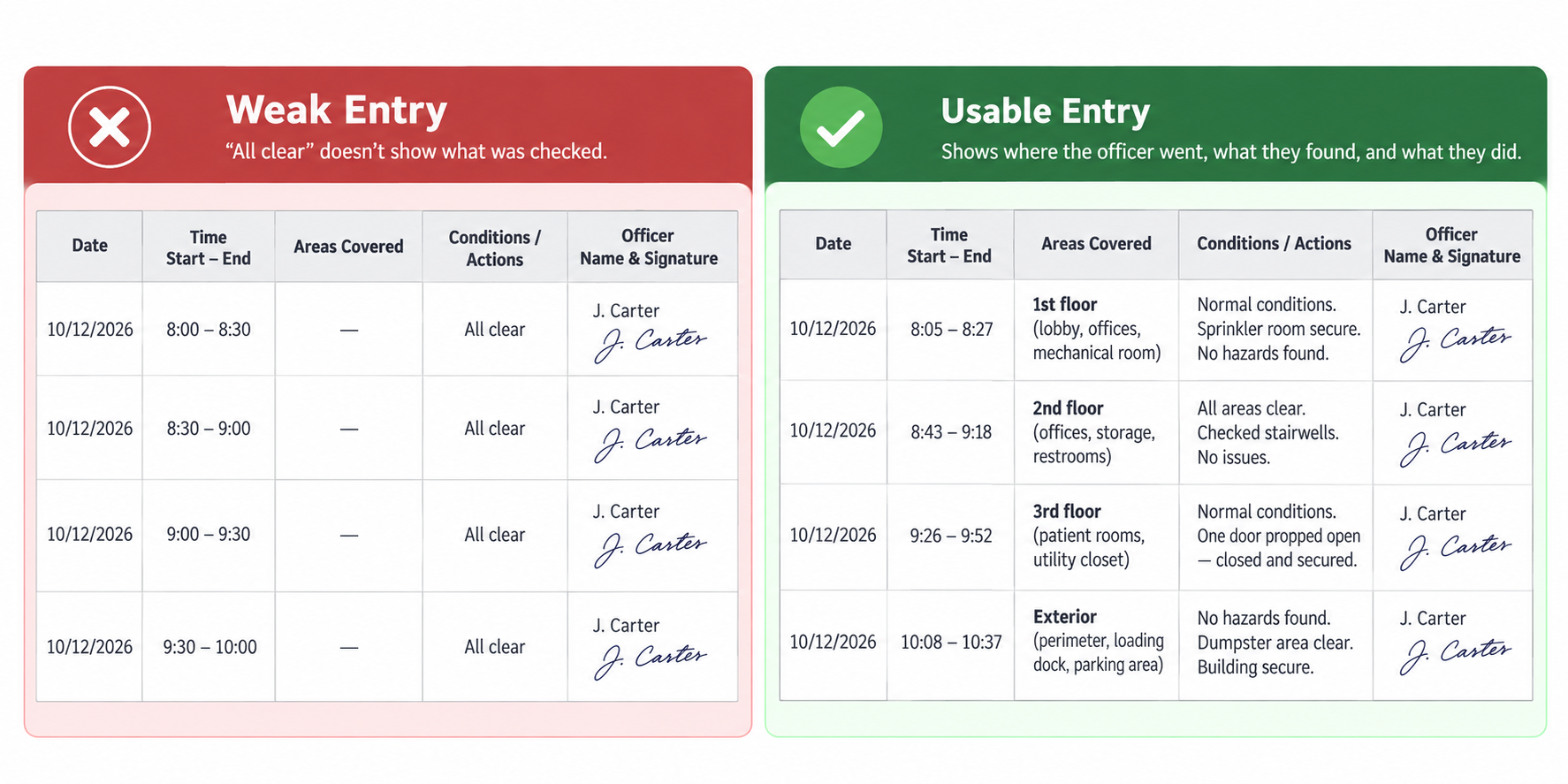
Each patrol needs the date, the exact clock time it began and ended, and the full name and signature of the person who conducted it. It also needs the specific areas covered, named by floor, wing, zone, or room, along with the conditions observed and what was done about anything abnormal.
“All clear” repeated down a page is the most common weak entry. It records that nothing happened without recording that anyone looked. A usable entry names the areas walked, which is what distinguishes a patrol from a signature.
The log also needs a header establishing the circumstances: the building address and the specific area affected, which system is impaired and why, and the date and time the impairment began. Record confirmation that the AHJ was notified, with the time and the name of the person contacted, and name the person responsible for the watch. When the system is restored, close the log with that date and time.
Digital logs are often acceptable, though some AHJs still expect a physical log available on site. If you use one, confirm it timestamps entries at the moment of patrol and that entries cannot be edited afterward without leaving a record. An app that permits backdating offers no more assurance than a paper log.
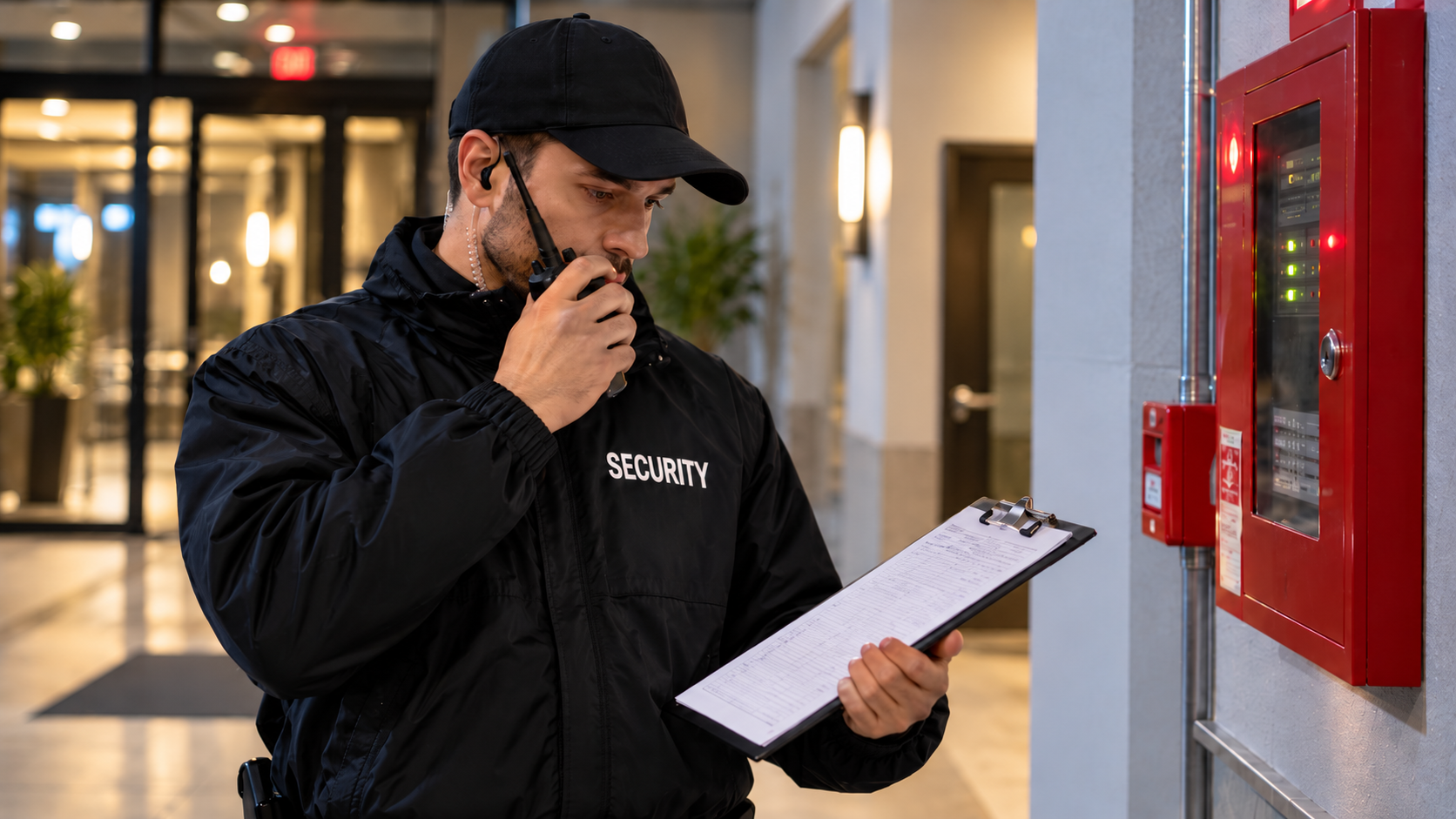
Patrol frequency is set by your AHJ, and it varies by occupancy type, building size, and the nature of the impairment. A healthcare facility with an impaired alarm system and a single-story warehouse with a sprinkler branch shut down will not receive the same instruction. Whatever interval you are given, two things hold.
A log reconstructed at the end of a shift is less accurate, and visibly so. Entries written hours later tend to land at suspiciously even intervals and lose the detail that makes a patrol look like a patrol.
A missed patrol noted in the log is a problem. A missed patrol filled in afterward is falsification, and it converts a compliance issue into something considerably worse.
That interval is also what makes an in-house fire watch harder than it looks. The person conducting it can have no other duties during the patrol, has to know the building’s layout and hazards, and has to maintain the interval continuously, including overnight. Assigning it to a maintenance employee who also has a day job is where most in-house watches break down.
Inspectors look for the same handful of problems, and most of them concern the log rather than the watch.
Most of the scrutiny a fire watch log receives comes long after the watch itself is over.
Adjusters request the log after any fire loss during a documented impairment. A complete one supports the claim. A thin one gives grounds to examine whether the property met its obligations during the period, which is a conversation conducted from a weak position.
The log becomes a discovery document, read alongside whatever else your property recorded that year. Consistency across the file matters as much as the content of any single page, since a record whose format changes from shift to shift suggests nobody was reviewing it.
Keep the log after the system is restored. Retention periods vary by jurisdiction, insurer, and contract, so confirm the requirement that applies to you rather than assuming a default. Storing it with your other security incident documentation keeps the file coherent if anyone ever reads the year as a whole.
A fire watch is straightforward work done under conditions that make it easy to do badly: short notice, overnight hours, and a building nobody is otherwise occupying. The log is where that shows.
A fire watch also covers nothing else. A person conducting a fire watch is not available for access control, incident response, or general patrol, so properties needing both typically run mobile patrol or a staffed post alongside it.
If you have a system coming out of service, or a fire marshal has already ordered a watch, Stonewall Security staffs fire watch assignments with site-specific post orders and supervisor review of the log. Request fire watch coverage when you need it, and we’ll actually respond.

