
.png)
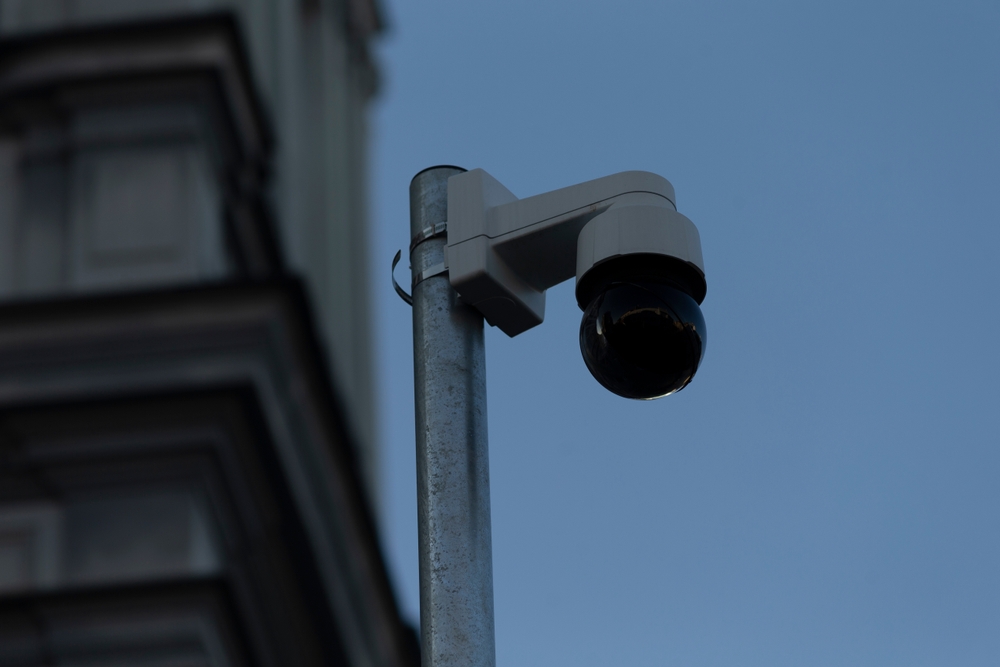
Night vision security cameras fail quietly. The recording runs, the timestamp is right, and the footage shows a figure crossing your lot with nothing in it you could hand to an insurer or an officer. The useful test is whether the footage identifies anyone.
That gap widens through the fall, as sunset moves earlier and the after-hours window stretches on every commercial property. This guide covers how night vision works, where infrared falls short, and how lighting and placement decide what your system returns.
Most disappointing night footage traces back to a short list of causes, and nearly all of them are fixable once you know which one you are looking at.
The pattern worth noticing is that only two of those are camera problems. The rest are placement and lighting problems, which is why planning camera coverage often changes more than replacing a camera does.
Commercial cameras handle darkness in three ways. The difference is not image quality but dependency: one brings its own light, and two rely on light you already have. Knowing which you are buying tells you whether your footage problem is a camera problem or a lighting problem.
The camera carries its own illuminators, small emitters that flood a scene with light the sensor reads and the human eye cannot. NASA's overview of infrared waves covers the physics: infrared sits just past visible light on the electromagnetic spectrum, which is how a camera works in what looks to you like total darkness.
The image comes back monochrome, and the camera brings everything it needs, so it functions in a windowless stairwell at midnight.
No illuminators at all. The camera sees using a larger sensor and a wider aperture to collect whatever light your property already has, whether that is a wall pack over a door, spill from a neighboring lot, or a streetlight at the curb.
Because it never switches to infrared, the footage holds its natural appearance rather than flattening to the washed grey of an illuminated frame. That also means performance moves with your lighting, not the camera. Put one under a fixture and it outperforms infrared on the same wall. Point one at an unlit fence line and it returns a dark frame with noise in it.
Also dependent on ambient light, but processed to hold color instead of dropping to black and white. Color is often the identifying detail. A description of a dark jacket narrows nothing, while a red jacket narrows a great deal, and the same holds for vehicles.
The tradeoff is that it needs real ambient light to deliver, so it belongs in zones you can light rather than on the unlit stretches of a perimeter.
Infrared handles most commercial darkness well enough. Its failures surface at the worst moment, when you are already looking for footage of something that happened, and they cluster in three places.
Because detection range and identification range are not the same distance, and the gap between them is wide. An illuminator's output falls off sharply as distance increases, so a camera that clearly shows a figure crossing your yard may show nothing usable about who that figure was.
Across an open lot, a large yard, or a long fence line, this is the difference between knowing something happened and having something to give an officer.
Manufacturer range figures assume conditions most commercial sites do not offer, so treat the stated distance as the detection number, not the identification one.
Because the illuminators are lighting the glass rather than the scene behind it. Infrared reflects straight back off the pane into the lens, producing a bright wash and nothing beyond it.
The same thing happens on wet asphalt, roll-up doors, polished concrete, and vehicle bodies, which reflect unevenly enough to blow out one part of a frame while the rest stays dark. A camera meant to watch through a storefront generally needs to sit outside it, on the approach side.
Because infrared scatters off water droplets and airborne particles, so the illuminator lights the weather instead of the scene.
Steady rain, river-valley fog, and low cloud all produce the same effect, and sites with dust in the air from construction or material handling get it from a different source. This is why a camera that tests well on a dry evening in September can disappoint you in January, and it is worth knowing before the season rather than during it.
A low-light camera is only as good as the light already on site. That makes it the easiest of the three to get wrong on paper and the easiest to fix in practice, because the variable you adjust is usually a fixture rather than a camera.
Whatever light your property already produces is the entire budget the sensor has to work with. Add a fixture over a door and the same camera returns a noticeably better frame. Take the fixture away and no setting recovers it. This is why a low-light camera should never be specified before someone has looked at the site after dark and noted what is actually lit.
To gather more light, these cameras hold the shutter open longer. That works well for a static scene and poorly for a moving one, so a person walking through a dim frame can arrive blurred while the background stays sharp. Faces and plates in motion are exactly what you tend to need, which makes this worth testing at the approach points rather than assuming it away.
Because performance follows the light, camera positions get chosen around fixtures rather than independently of them. A position with a clear sightline and no light is worse than a slightly compromised position under a wall pack. This is the part most easily handled during coverage mapping, when lighting and camera positions are still both movable.
Color is frequently the identifying detail, and it is the one thing infrared cannot give you at any distance or quality. Whether it is worth specifying comes down to which zones of your property you can realistically light.
A dark jacket describes most of the population. A red jacket does not, and vehicle color works the same way. When the thing you will need after an incident is a description precise enough to act on, monochrome footage frequently falls a step short of useful.
Point a color night vision camera at an unlit fence line and it will either drop to monochrome or return a noisy, smeared image at a reduced frame rate. That is the physics of the sensor, not a defect, and no configuration changes it. Color capability on an unlit zone is something you paid for and cannot use.
The workable approach is to sort your property into areas you can light and areas you cannot, put color capability in the first group, and let infrared handle the second. A site rarely needs one answer everywhere, and deciding this before installation avoids buying capability the location cannot support.
Lighting and cameras get treated as separate budgets by most properties, one under facilities and one under security. After dark, they are the same decision. A modest amount of well-aimed light frequently does more for footage quality than a more expensive camera, because it lets a low-light or color sensor work as designed instead of falling back to infrared.
Aim matters more than brightness, and light falling across a face on the approach side of a door is worth more than a brighter fixture pointed the wrong way. DarkSky International's outdoor lighting principles make the same point from the other direction: that light should be targeted and shielded rather than simply increased.
Monitoring is the third piece of the same decision. A camera recording overnight gives you a record, not a response. If the value of your night coverage is finding out the next morning what happened, image quality is the whole conversation.
If the value is intervening while it happens, the camera is only an input, and it needs live video monitoring or mobile patrol visits scheduled at the hours that carry real risk.
Timing decides how easy any of this is to fix. The after-hours window widens week by week through the fall, and exterior installation work gets harder once the rain settles in, so a gap found in September is cheaper to close than the same gap found in December.
The most useful thing you can do before then costs nothing. Walk the property after dark, at the hour that concerns you, and stand where each camera stands.
Reflective surfaces, unlit approaches, and badly aimed fixtures all show up in ten minutes of walking that no specification review would catch. Construction sites and other open perimeters with staged materials tend to reveal the most.
If you would rather not sort it out alone, Stonewall Security plans lighting, placement, and monitoring together rather than as three separate jobs. Request a camera coverage consultation when you are ready, and we'll actually respond.

