
.png)
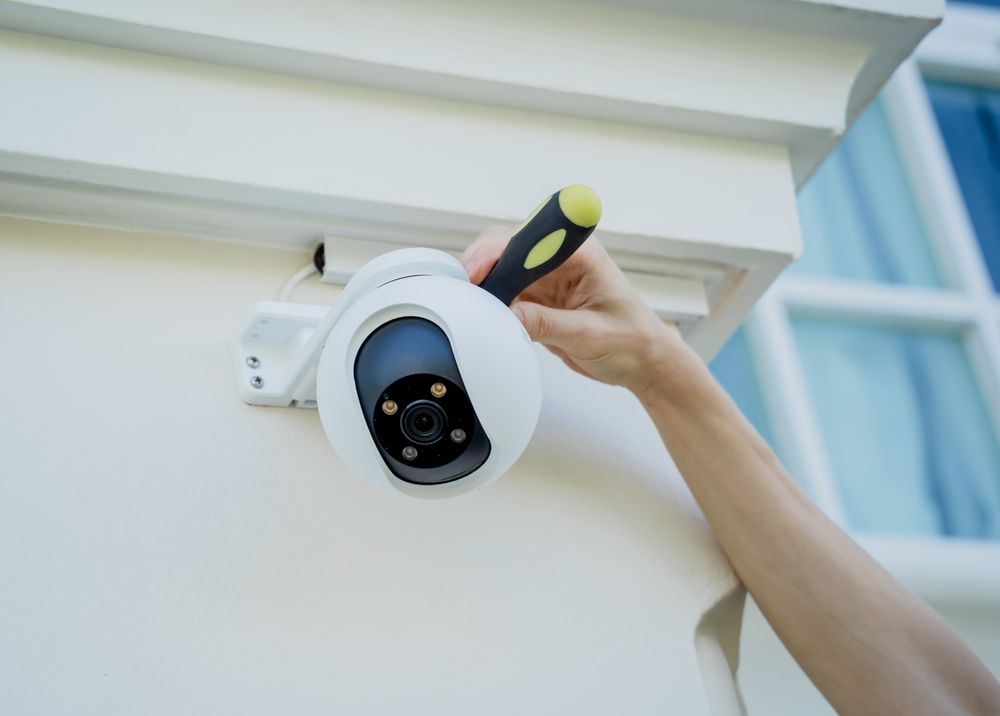
A commercial CCTV installation requires cameras, a way to deliver video and power to each camera, a recorder, storage, and a network connection for remote access or monitoring.
Mounting hardware and enclosures matter more than they sound, because a camera in the wrong housing on an exterior wall in the Pacific Northwest will fog, streak, or drift out of alignment within a season.
Your CCTV camera order matters too. You need to figure out what areas need coverage before choosing the cameras, because the number of cameras and the type you need depend on what you actually need to see.
Buying a package of eight cameras and deciding where to put them afterward can leave you with three cameras covering the same parking row while the loading dock has none.
That’s why our commercial camera installation and monitoring work starts with a site walk. We look at the property first, identify the areas that need coverage, and then choose the right equipment for the job.
PoE, or Power over Ethernet, uses one network cable to provide both power and data to each camera, following a standard family published by the IEEE.
Wireless cameras send video over Wi-Fi and get power from a nearby outlet, battery, or solar panel, depending on the setup. For most commercial properties, PoE is the better option. Wireless can make sense in certain situations, but those cases are usually easy to identify.
If you’re deciding between PoE and wireless, these are the main differences to consider:
PoE CCTV is generally more reliable than wireless because it is not affected by radio interference and provides a stable wired connection. PoE cameras also do not need an outlet at the mounting point.
Adding battery backup to the switch can keep the cameras running during a power outage, which is useful in areas where winter storms frequently cause power failures.
The tradeoff is that the switch becomes a single point of failure. If it loses power without backup, all connected cameras go down. Wireless cameras are less dependent on a single device, but they are more susceptible to connection problems.
Choose PoE if reliability and consistent connectivity are the priority. Choose wireless if easier installation and greater independence between cameras are more important.
Choose PoE when cable routes are accessible, such as in new construction or properties with accessible ceilings or existing conduit. Older masonry buildings, historically protected structures, and sites where cameras are far from accessible cable pathways can make PoE installation more expensive and difficult. In these cases, wireless may be more practical.
Choose wireless for temporary installations where permanent cabling is not justified. Construction sites that will change significantly over 18 months or event setups that last only a weekend may not warrant the labor and cost of permanent cable runs.
PoE handles multiple cameras better because each camera has its own dedicated network path. Video requires a lot of data, especially at higher resolutions, and wireless cameras have to share the same spectrum.
When several cameras stream at once, they also compete with tenant Wi-Fi, point-of-sale equipment, and neighboring networks. This can lead to dropped frames and reduced image quality, especially when there is camera movement.
If you choose wireless, keep the camera count modest, confirm line of sight, and account for the surrounding interference rather than assuming the spectrum is clear. The PoE standards are published by the IEEE, which allows you to verify what a vendor means when it describes equipment as standards-compliant.
Camera placement determines how useful the system will be. A high-specification camera pointed at a wall is ineffective, while a basic camera positioned at eye level beside an entrance can capture identifying footage.
Use the following steps to plan camera placement across the property:
Cover entrances, exits, and stairwells first. These areas are easier to monitor because traffic is concentrated and faces are usually oriented forward.
Next, cover registers, safes, stockrooms, server rooms, and loading docks where valuable assets or sensitive activity are concentrated.
Exterior coverage is especially important during winter, when many commercial properties are busiest after dark. Choose cameras that can provide useful footage in low-light conditions.
Walk the property and identify areas that cannot be seen from a camera position. Compare these areas with locations where incidents have occurred. Common blind spots include corners near fitting rooms, gaps between buildings, and the far ends of parking rows.
Cameras record events but do not respond to them. Properties that need a physical security presence can combine CCTV with unarmed security officers during operating hours and mobile patrols overnight. Facilities that require continuous verification, such as data centers, may use all three.
Determine where coverage is needed first, then choose cameras and equipment that match those locations and conditions.
A CCTV system is only as effective as its weakest camera placement. Effective CCTV installation starts with a site assessment, matching each camera to a specific purpose, and setting storage capacity based on how the footage will be used.
That same approach is used by Stonewall Security, a locally owned company providing commercial camera installation and monitoring across Seattle, Bellevue, Tacoma, Everett, Spokane, and other service areas.
Our systems are supported by supervisor oversight and reporting, with coverage planned around the specific property rather than a standard package. If you want coverage designed around your property rather than a package quote, request a camera coverage consultation, and we'll respond.

