
.png)
Whether it is illegal to video record someone without their consent is one of those questions with no single answer, because it turns on several factors at once: where the person is, what you are capturing, whether you are recording sound along with the picture, and which state's laws apply. The same act can be treated very differently depending on those details, which is why a blanket yes or no tends to mislead more than it helps. What is worth understanding is the set of factors the law weighs, so you can see where your own situation might fall and know what to check. This article walks through those factors: why sound is treated differently from picture, how consent laws vary between states, the privacy concept that sits under all of it, and what the whole picture means if you are putting cameras on a property you own or manage.
One of the most important things to understand is that video and audio are often governed by separate rules, and the two are not weighed the same way.
Recording moving images and recording sound have historically been handled under different bodies of law. Many statutes written to protect people focus specifically on the capture of private conversations, meaning the audio, and can treat recording sound without permission far more strictly than recording a silent picture of the same scene. So a situation that raises few concerns as silent video can become a serious problem the moment sound is added.
This distinction is a big reason so many security camera systems are configured to capture video without audio. Leaving sound out of the equation avoids the strictest layer of these rules entirely. If you have noticed that footage from a store or lot rarely has audio, this is usually the reason. Whether audio recording is permitted in any specific case, though, is exactly the kind of question that depends on the law where you are.
If the last section was about picture versus sound, this one is about who has to say yes. When people ask whether recording someone is legal, they are frequently asking about consent, and consent laws vary meaningfully across the country. These rules apply mostly to conversations.
States are often described as falling into two groups. In some, only one participant in a conversation needs to agree to a recording. In others, every participant in a private conversation must consent. Washington is generally described as an all-party consent state, which points to a stricter standard than some other states apply. But how that framework plays out in a particular instance can hinge on specifics that a general description cannot resolve, so knowing your state's category is a starting point rather than a conclusion.
Consent laws lean heavily on one idea worth pulling out on its own: whether a conversation or moment was "private" to begin with. The broader legal concept behind that is often called a reasonable expectation of privacy, and it shapes recording questions well beyond conversations alone.
The general principle is that the law tends to offer people more protection in places where anyone would expect to be private, and less in places where they would expect to be seen. A hushed exchange behind a closed door sits at one end; words spoken openly in a busy room sit at the other. Some spaces are widely recognized as raising serious concerns for any kind of recording, such as restrooms, locker rooms, changing areas, medical exam rooms, and inside a person's home. Others, like entrances, sales floors, and building exteriors, are places people generally accept they may be observed.
Plenty of real situations land in between. A shared break room, a camera that happens to take in a neighboring property, or a lens near a window can all raise questions that neither the consent rules nor a simple privacy principle settles cleanly. That ambiguity is precisely why individual situations are worth checking rather than assuming.
For someone responsible for a building, the practical question is how to get useful coverage without drifting into the risky zones those principles describe. A few habits help translate the general rules into day-to-day decisions.
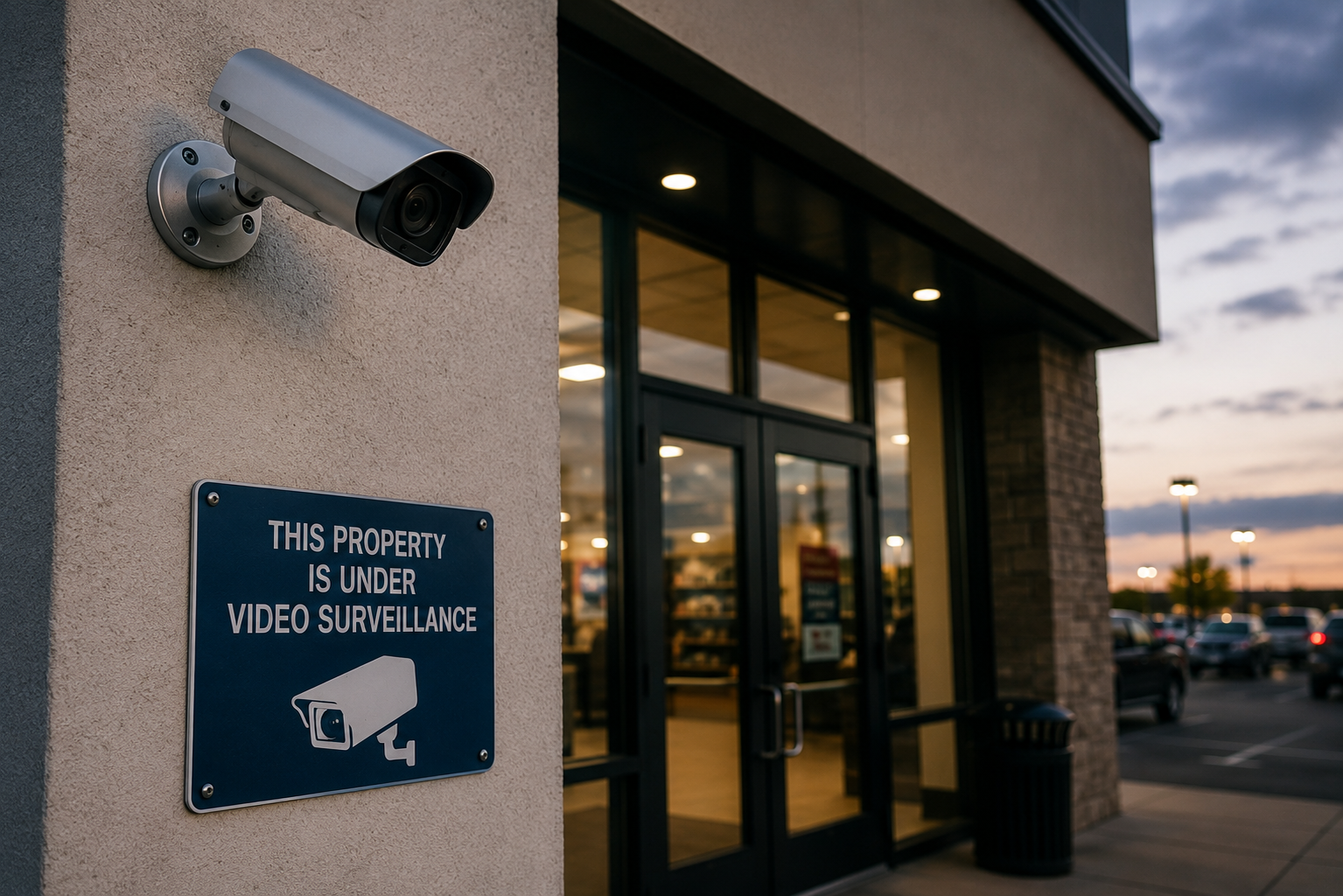
The guiding instinct is to keep cameras pointed at what is genuinely yours to watch, your entrances, lots, and grounds, rather than a neighbor's windows or another business's interior. Notice matters too: posting that a property is under surveillance is a common practice, and in some settings it carries weight beyond simple courtesy. And because coverage decisions are made lens by lens, the way a system is laid out is where these considerations either get handled or get missed. Careful security camera placement is the point at which good coverage and sensible boundaries get designed in together, before a single camera goes up.
General background is not the same as knowing the law that governs your circumstances. Consent standards, privacy protections, and notice rules differ by state, can turn on the particular facts, and may even depend on how footage is used after it is captured. Washington's all-party consent framework is a good reason to seek local guidance rather than lean on a broad overview. For anything that affects a real decision, confirm the current requirements with the applicable RCW or a qualified attorney before you record. If your question is specifically about lawful surveillance on a property, a company that installs these systems every day can also help you plan coverage that keeps the rules in view.
A camera system should protect your property without creating new problems of its own. Stonewall Security handles commercial camera installation and monitoring across Seattle and throughout Washington State, planning coverage that captures what matters while keeping cameras aimed where they belong. If you want a surveillance setup designed around both your security needs and your property's realities, request a camera coverage consultation and we'll actually respond.
Because this is a sensitive and legally significant topic, treat the above as general information rather than legal advice, and confirm anything that applies to your own circumstances with a qualified attorney.

